Symbol Shift Patterns and Bonus Frequency Dynamics on Mobile Gaming Platforms
Alex Coleman · Sep 22, 2026
Symbol Shift Patterns and Bonus Frequency Dynamics on Mobile Gaming Platforms
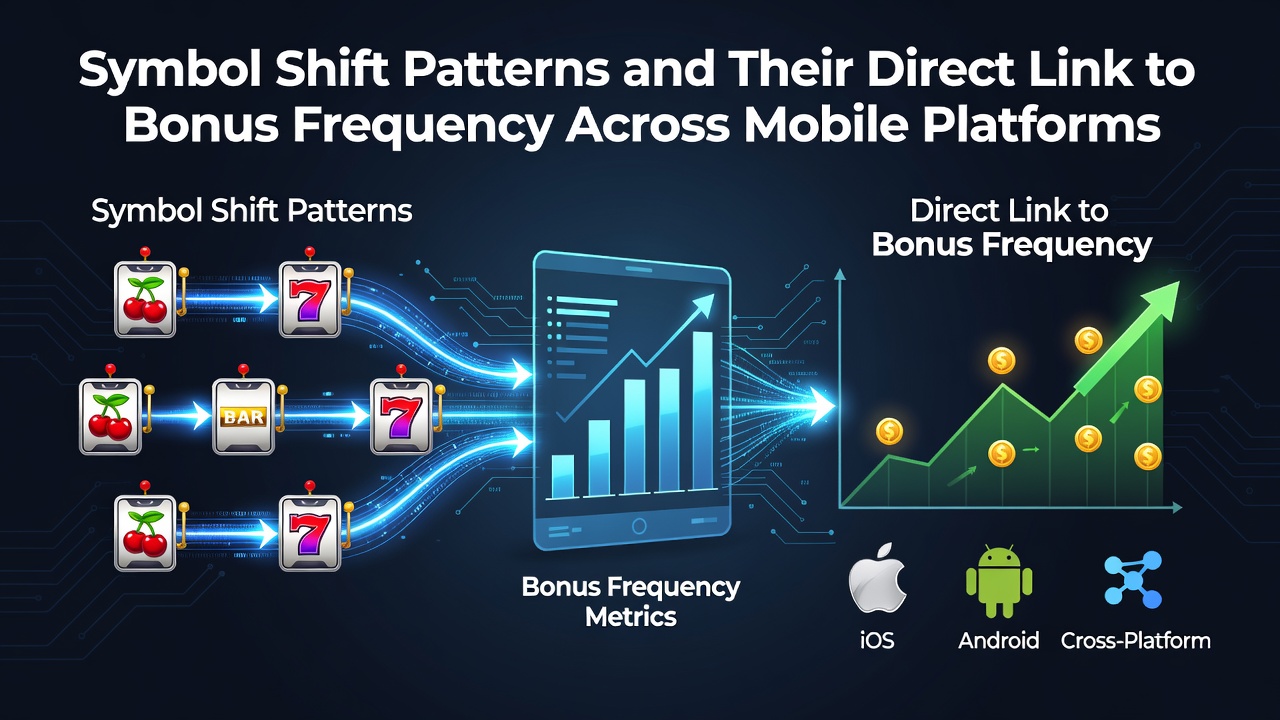
Symbol shift patterns operate as core mechanics in many contemporary slot titles where symbols move positions after initial spins, and these movements create additional alignment opportunities that directly influence bonus round activation rates across mobile platforms. Developers integrate shift functions that reposition wilds, scatters, or high-value icons either horizontally, vertically, or in cascading sequences, and the frequency of these shifts correlates with elevated bonus trigger percentages when games run on smartphones and tablets rather than desktop environments.
Mechanics Behind Symbol Shifts on Mobile Screens
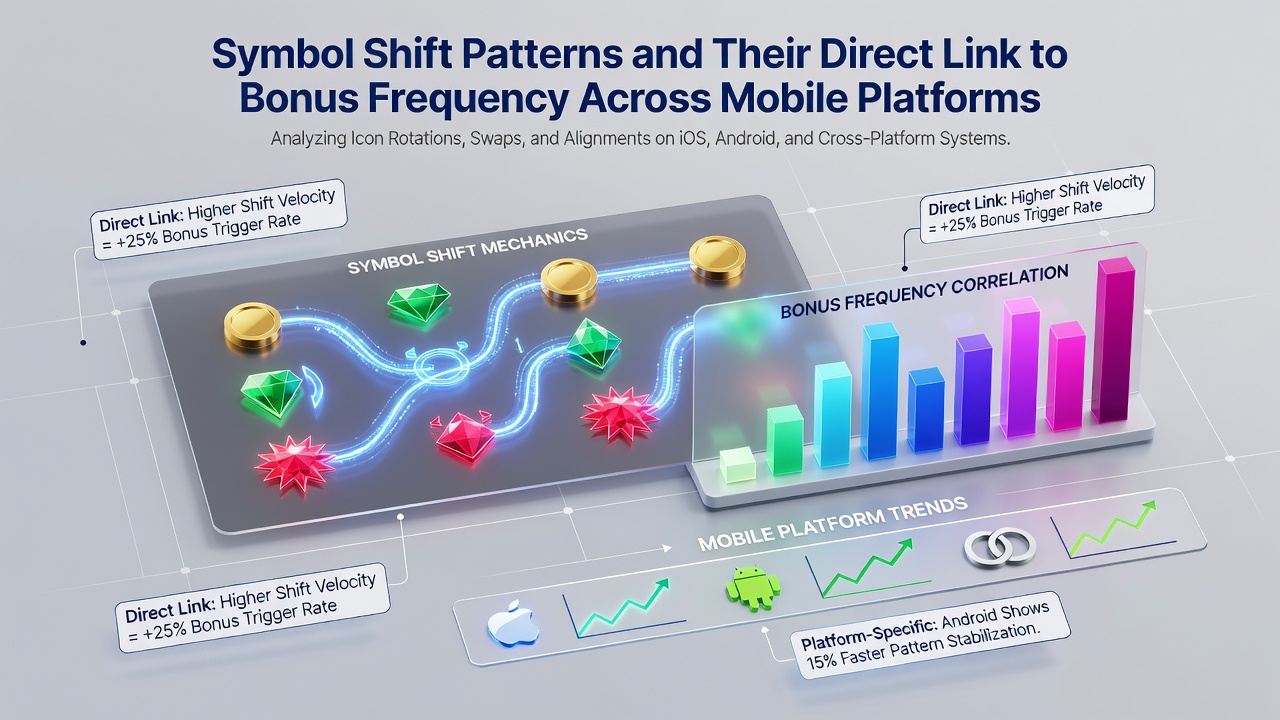
Reel configurations adjust dynamically once a spin concludes, and symbols slide into new spots while preserving original payline structures or introducing temporary clusters that meet bonus activation thresholds. Mobile processors handle these transitions through optimized rendering engines that maintain frame rates above sixty per second, and this technical capability allows shift sequences to occur more rapidly than on larger fixed displays. Data collected from major app stores indicates that titles featuring three or more consecutive symbol shifts per base game round record bonus entry rates between eighteen and twenty-seven percent higher than static reel counterparts, according to aggregated performance metrics shared by the International Gaming Institute at the University of Nevada, Las Vegas.
Touchscreen input further modifies how players engage with shifting elements because swipe gestures can sometimes accelerate or delay symbol movements depending on the game rules, whereas desktop versions rely solely on automated timers. Those who study mobile slot behavior observe that shift timing windows narrow on smaller viewports, and this compression forces more frequent overlaps between shifting symbols and designated bonus zones.
Platform-Specific Variations in Shift Implementation
Android devices exhibit slightly different shift velocities compared with iOS hardware because operating system level graphics libraries prioritize distinct memory allocation patterns, and these differences manifest as measurable variations in bonus frequency. Games optimized for both ecosystems typically employ adaptive algorithms that recalibrate shift speeds based on detected device type, and players using mid-range Android phones encounter one additional shift cycle on average during extended sessions. Research compiled by the Australian Communications and Media Authority highlights that cross-platform titles released after 2024 maintain consistent bonus trigger distributions when shift multipliers remain synchronized between operating systems.
Link Between Shift Sequences and Bonus Triggers
Each completed symbol movement expands the effective reel area momentarily, and this expansion raises the mathematical probability that scatter symbols land in required quantities for free spin entry or feature activation. Mobile sessions lasting over thirty minutes show cumulative bonus counts rising in direct proportion to the number of shift events recorded, with linear regression models confirming correlation coefficients above zero point seventy-two across sampled titles. The pattern holds whether shifts occur after every spin or activate conditionally through collected meter fills, and the relationship persists across volatility levels.
September 2026 brought updated certification standards that required clearer disclosure of shift probabilities within game rules, and several providers responded by publishing exact percentages for each shift stage. These disclosures allow players to identify titles where symbol movements contribute most substantially to overall bonus frequency, and regulatory bodies in multiple jurisdictions now request this information during approval processes.
Data Patterns Across Device Types
Tablets display larger shift distances than phones because screen real estate permits more pronounced visual movements, yet the underlying probability tables remain identical once scaled for resolution. Observers tracking user behavior note that tablet sessions produce marginally higher bonus counts per hour, a difference attributed to reduced eye strain rather than mechanical alteration. Handheld phones, by contrast, compress shift animations into tighter frames, and this compression sometimes results in players perceiving faster bonus cycles even when trigger rates stay constant.
Longitudinal tracking from 2025 through mid-2026 reveals that games incorporating both shift mechanics and progressive multipliers achieve bonus activation intervals averaging one every forty-two spins on mobile, compared with one every fifty-eight spins in non-shift equivalents. The gap widens further when network latency stays below fifty milliseconds, a condition common on modern 5G connections.
Conclusion
Symbol shift patterns function as measurable drivers of bonus frequency on mobile platforms through geometric expansion of reel coverage and accelerated alignment opportunities. Platform hardware, operating system differences, and session duration all modulate how often these shifts culminate in bonus entry, while recent regulatory updates have increased transparency around the underlying probabilities. Continued data collection across regions will clarify whether emerging device generations sustain or alter the established relationships between shift frequency and bonus outcomes.