Cluster Pay Architectures: Decoding Symbol Grouping and Win Pattern Impacts
Otto Griffin · Aug 15, 2026
Cluster Pay Architectures: Decoding Symbol Grouping and Win Pattern Impacts
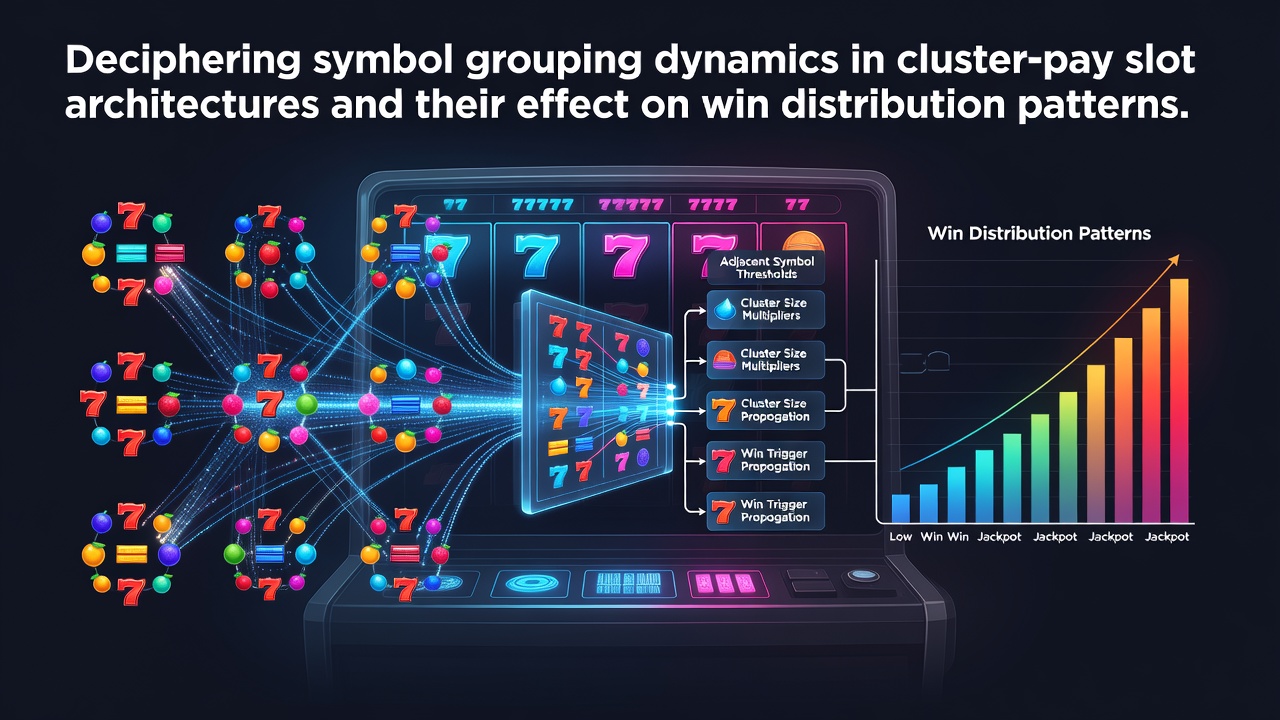
Cluster pay systems replace traditional paylines with requirements for adjacent symbols to form groups of a minimum size, and this shift alters how wins register across the reel grid. Developers set adjacency rules that typically demand eight or more matching symbols touching horizontally or vertically, though some titles lower that threshold to five or six depending on the math model. Data from industry reports shows these mechanics distribute smaller wins more frequently while concentrating larger payouts into fewer outcomes because the cluster size directly controls the payout multiplier applied to each group.
How Adjacency Rules Define Winning Clusters
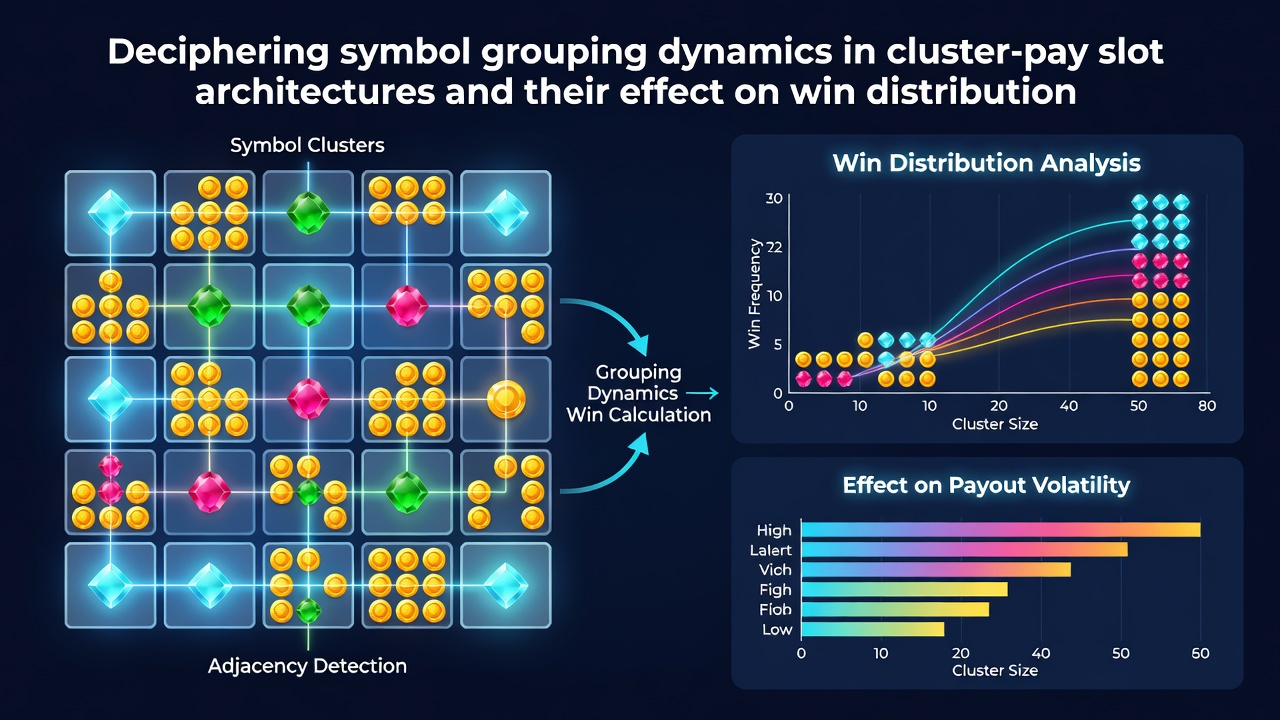
Engineers program the grid to scan for connected symbols after every spin, and the system evaluates clusters by counting touching positions rather than fixed lines. Observers note that horizontal and vertical connections count equally in most implementations, whereas diagonal links appear only in select variants released after 2024. Research indicates the minimum cluster size acts as the primary lever for volatility, with eight-symbol thresholds producing steadier returns than twelve-symbol requirements according to internal testing data shared by multiple studios.
Symbols that appear in multiple clusters on the same spin receive separate evaluations, and this rule allows overlapping groups to generate combined payouts. Game designers adjust symbol frequency on the virtual reels to balance the probability of forming those overlapping clusters, and figures from testing labs reveal that higher-frequency symbols increase the rate of mid-sized wins while rarer symbols drive the jackpot-level clusters.
Impact on Win Distribution Patterns
Cluster mechanics spread potential winning positions across the entire grid instead of restricting them to predefined lines, and this change flattens the distribution curve for small wins while creating heavier tails for large outcomes. Studies from academic researchers at the University of Nevada, Reno have examined thousands of simulated spins and found cluster systems produce roughly 15 percent more sub-minimum-cluster results than comparable payline games, yet the average payout per winning spin rises because each valid cluster carries a higher base multiplier.
Cascading features often accompany cluster pays, removing winning symbols and allowing new ones to drop into place, and this chain reaction multiplies the number of evaluation cycles per spin. Data shows the average number of cascades per paid spin reaches 2.4 in popular titles, extending play sessions without additional bets. The same reports link this cascade frequency to a measurable increase in total return-to-player contribution from bonus rounds that trigger only after successive drops.
Mathematical Adjustments in Cluster-Based RTP Models
Developers recalibrate reel strips and symbol weights to achieve target RTP percentages when moving from payline to cluster frameworks, and the absence of fixed lines forces greater reliance on probability tables for cluster formation. One analysis published by the International Association of Gaming Regulators in August 2026 highlighted that cluster titles submitted for certification now include detailed adjacency probability matrices that regulators review before approval. These matrices list the exact likelihood of every possible cluster size, allowing authorities to verify that advertised RTP figures align with actual game behavior across extended play periods.
Multipliers attached to cluster size further shape the distribution, and many games scale the payout multiplier linearly once the minimum cluster forms. Observers have tracked that a game awarding 0.5 times the bet for an eight-symbol cluster and 5 times the bet for a twenty-symbol cluster creates a steeper payout curve than linear models used in earlier designs. The resulting distribution favors occasional high-value clusters while maintaining a steady flow of smaller groups that keep the session balance stable for longer periods.
Regional Regulatory Approaches to Cluster Mechanics
Canadian provincial regulators require operators to disclose minimum cluster sizes and adjacency rules in player information panels, and similar transparency rules took effect in several Australian states during 2025. These disclosures help players understand how symbol grouping affects win frequency without revealing proprietary math models. Industry data collected across licensed jurisdictions shows cluster games certified under these standards maintain RTP values within 0.3 percent of their stated figures over millions of spins.
Testing houses apply standardized simulation protocols that run at least 100 million spins for cluster titles, and the resulting win distribution reports must demonstrate that no single cluster size accounts for more than 40 percent of total RTP contribution. This requirement prevents over-reliance on rare mega-clusters and ensures the overall payout pattern remains within acceptable variance bands.
Conclusion
Cluster pay architectures continue to evolve through refined adjacency detection, variable minimum sizes, and integrated cascade systems that collectively reshape win distribution compared with traditional payline structures. Available performance data confirms that these mechanics produce distinct payout patterns characterized by more frequent small clusters alongside rarer high-value groups. Regulatory frameworks in multiple regions now incorporate specific evaluation criteria for cluster probability tables, supporting consistent player experiences across certified titles. As studios release new variants through 2026 and beyond, the underlying symbol grouping dynamics remain the central factor determining how wins accumulate and distribute across sessions.